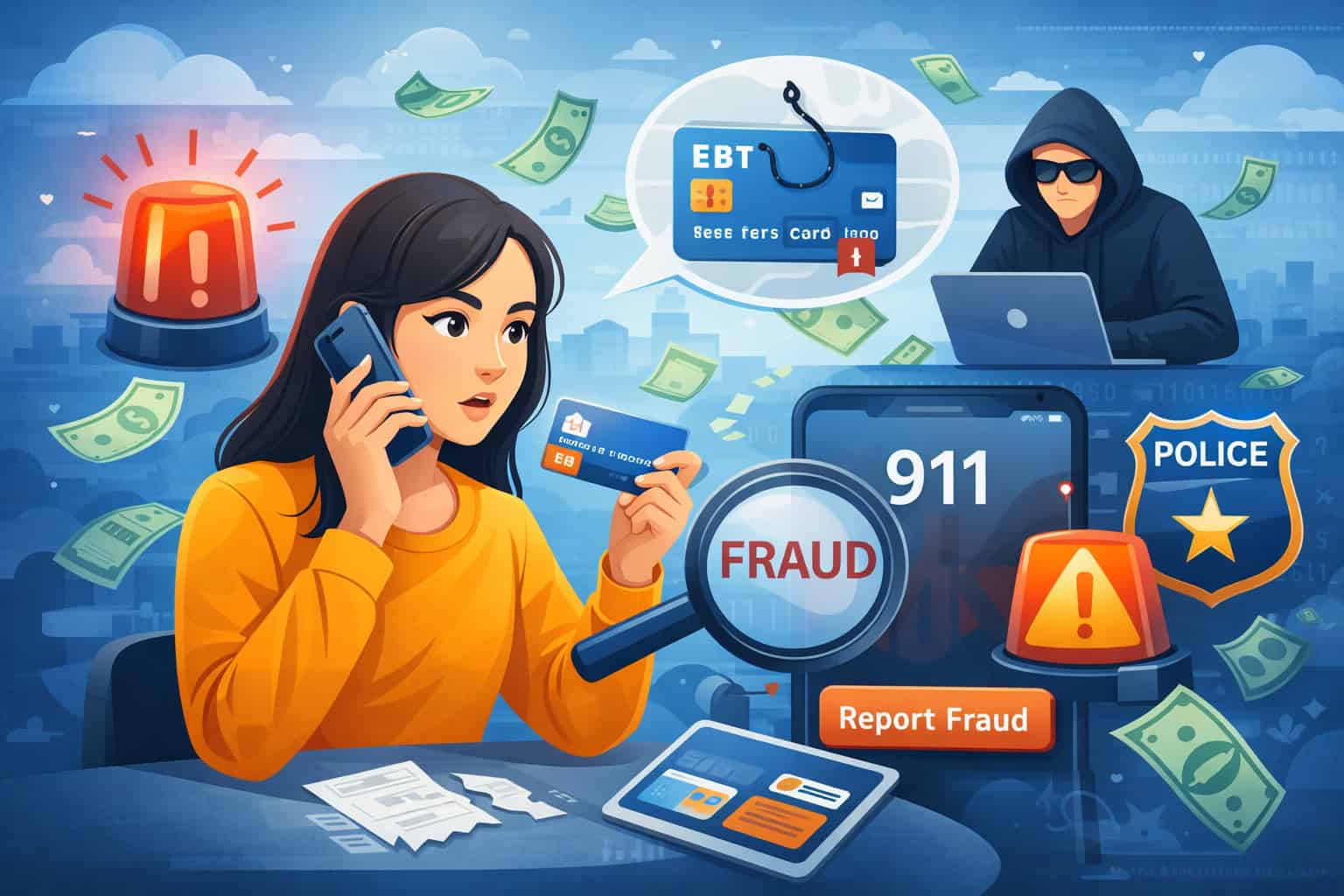
EBT fraud can happen fast, and it often hits people at the worst possible time. A missing card, unexplained balance drop, suspicious purchase, or strange text message can quickly turn into a stressful situation when you rely on those benefits for essentials.
If you need to report fraud on EBT card activity, the most important thing to know is this: act as soon as you notice something is wrong.
Fraud can involve a stolen card, a compromised PIN, card skimming, fake customer service calls, phishing messages, or unauthorized EBT transactions that appear without warning. In some cases, the card is physically gone.
In others, the card is still in your wallet, but the account has been used by someone else. That difference matters because the right response can change depending on how the fraud happened.
The good news is that there is a safe path forward. The EBT fraud reporting process usually starts with reviewing recent transactions, protecting the account right away, contacting official EBT customer service, notifying your local case office or benefits agency, and asking about replacement card and benefit restoration options.
Exact steps, timelines, and outcomes can vary by program and location, so it is always important to use official program resources rather than advice from strangers online or numbers from random search results.
This guide walks through how to report stolen EBT benefits, how to report unauthorized EBT transactions, what information to gather before you call, what to do if your card was stolen, and how to protect your account going forward. If you feel overwhelmed, take a breath. You do not need to solve everything at once. You just need to take the next safe step.
What EBT fraud looks like and why quick action matters
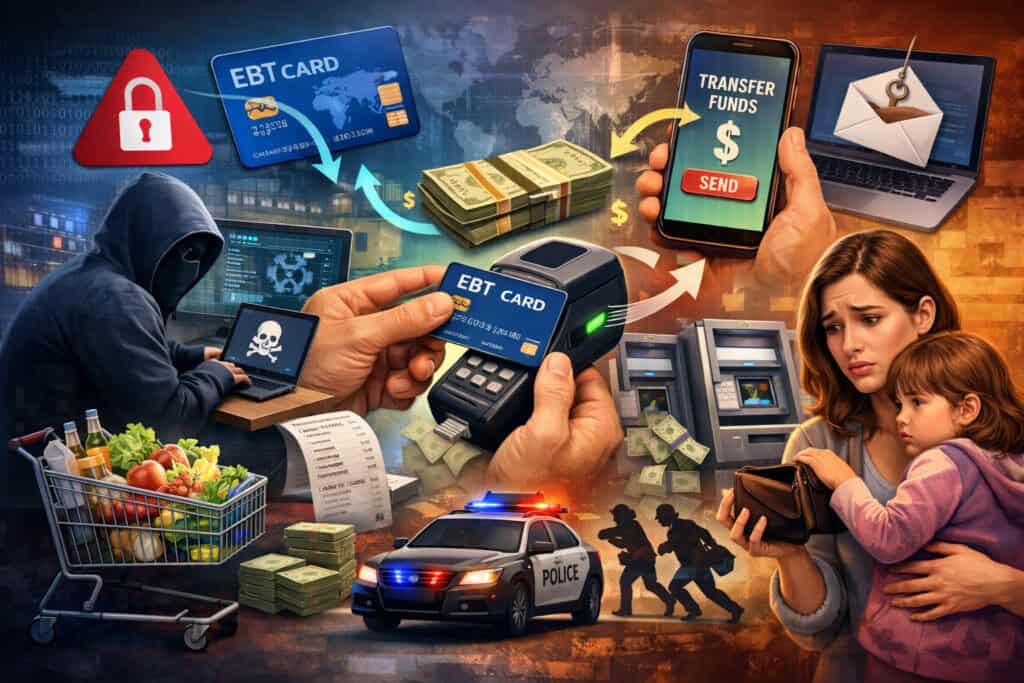
EBT fraud is any unauthorized use of your benefits or card information. That can include someone using your card without permission, accessing your account after stealing your PIN, draining your balance through a tampered card reader, or tricking you into giving away sensitive details through a scam.
For many people, the first sign of trouble is an unexpected balance, a declined purchase, or a transaction history entry they do not recognize.
The reason fast action matters is simple: the longer fraud goes unreported, the more time someone may have to use the account. Quick reporting can help protect any remaining benefits, start the review process, and create a record showing when you first noticed the problem.
That record can be important if you later need to file an EBT fraud complaint, request a replacement card, or ask about benefit recovery.
It is also important to know that not every strange transaction means the same thing. Sometimes the card itself is stolen. Sometimes the account is digitally compromised through skimming or PIN theft.
Sometimes the issue is a scam attempt that has not yet led to a loss, but still requires action. That is why the safest approach is to verify what happened through official channels and document each step.
Pro Tip: Do not wait for a second suspicious transaction before taking action. Even a small unauthorized charge can be an early warning sign that someone has access to your account.
Signs your EBT account may be compromised
Fraud is not always obvious right away. Some people notice a full balance disappearance. Others see one small unauthorized purchase before larger fraudulent transactions follow. Learning the warning signs can help you respond before more damage is done.
Common signs of suspicious activity include:
- A purchase, withdrawal, or balance change you do not recognize
- A declined card even though you expected benefits to be available
- A notice that your PIN was changed when you did not make the change
- Texts, emails, or calls asking you to “verify” your card number or PIN
- A card reader that looks loose, bulky, damaged, or different from usual
- Alerts from an official EBT portal or app showing activity at an unfamiliar location
- Being locked out of your account unexpectedly
- A card going missing from your wallet, purse, or home
Some fraud happens after a single moment of exposure, such as using the card at a tampered machine. Other cases build over time, especially when someone responds to phishing texts or shares details with a fake representative. Either way, unusual activity deserves attention immediately.
If you are unsure whether a transaction is truly fraudulent, check the date, amount, and location carefully. Sometimes merchant names appear differently than expected. But if anything still feels off, treat it as suspicious until official customer service confirms otherwise. It is better to double-check than to ignore a real problem.
Why reporting fast can help protect your benefits
When you report EBT fraud quickly, you do more than tell someone what happened. You create a timeline. That timeline can show when the suspicious activity began, when you contacted customer service, when you changed your PIN, and when you informed your case office or benefits agency. Those details may matter later if the program reviews your complaint.
Fast action can also help reduce additional harm. If official tools allow you to freeze EBT card access, lock the account, or change the PIN immediately, you may be able to stop more fraudulent transactions. Even if some benefits are already gone, protecting the account right away may preserve what remains.
Just as important, early reporting helps you avoid one of the most common mistakes: relying on unofficial advice. In a stressful moment, people sometimes call the first number they see online, reply to a text claiming to be EBT customer service, or click a link in a message warning that benefits will be suspended.
Those moves can make the situation worse. The safest path is always through official customer service, your official EBT portal if available, your mobile app if authorized by your program, and your local caseworker or benefits office.
Common types of EBT fraud and scams to watch for
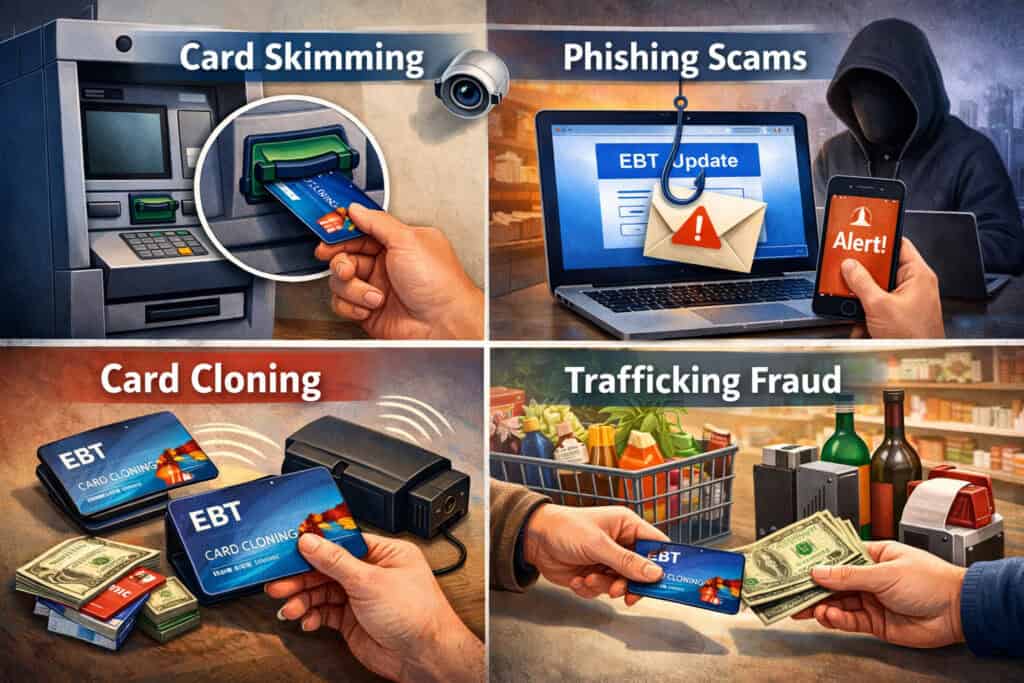
Understanding how fraud happens can help you respond more effectively. Not all cases follow the same pattern. Some involve direct theft of the card. Others involve stolen account information, compromised card readers, or social engineering scams designed to trick you into giving away access.
When people try to report fraud on EBT card accounts, one of the first questions they are often asked is what exactly happened. Knowing the common categories can make that easier to answer.
The most common forms of benefit theft include physical card theft, card skimming, PIN theft, phishing scams, fake customer service scams, and unauthorized transactions that appear after someone gains account access.
In some cases, multiple methods are used together. For example, a criminal may skim card data and then use a phishing message to steal the PIN.
The safest response to any suspected fraud is to focus on official reporting and account protection, not private investigation. You do not need to prove who did it before you call. Your job is to notice, report, secure, and document. Let official program staff explain what information they need next.
Card theft, lost cards, and unauthorized use
A physically stolen EBT card creates an urgent problem because someone may try to use it right away, especially if they already know or guess the PIN. A lost EBT card can also become a fraud risk if it falls into the wrong hands.
If the card is missing and you cannot quickly confirm where it is, the safest step is to report it as lost or stolen through official channels as soon as possible.
This type of fraud may look straightforward, but it can still be confusing. Some people only realize the card is gone after seeing unauthorized charges. Others still have the card but discover that someone close to them used it without permission. In both cases, the issue is unauthorized access to benefits.
Key signs of card theft or unauthorized use include:
- Your card is missing
- Transactions appear while the card is not in your possession
- The card was temporarily out of your control
- Someone nearby may have seen or learned your PIN
- Purchases happened shortly after the card disappeared
When you report EBT card theft, be ready to explain when you last had the card, when you noticed it missing, and whether the PIN may have been exposed.
Ask about an EBT replacement card and whether any immediate protective steps are available for your account. Even if you later find the card, reporting quickly is usually safer than waiting and hoping nothing else happens.
Skimming, PIN theft, and digital compromise
Skimming happens when card information is captured through a tampered card reader or another unauthorized device. PIN theft may happen at the same time if someone watches you enter the number, uses a hidden camera, or tricks you into revealing it through a scam.
This kind of fraud is especially upsetting because the card may never leave your possession, yet the account is still drained.
One clue that skimming may be involved is when fraudulent transactions appear even though your card is still with you. Another clue is when the account is used at a location you have never visited, or soon after you used the card at a machine that looked unusual.
You may not know exactly when the compromise happened, and that is okay. Official customer service can guide you through the EBT fraud reporting process without requiring you to identify the source yourself.
Protective steps matter here. If your program offers an official portal or app with account controls, look for options to freeze EBT card activity, lock the card, or change the PIN immediately. Then contact official customer service and your case office. Explain that the card may have been digitally compromised.
Phishing texts and fake customer service scams
Some fraud starts with a message or phone call rather than a card reader. A phishing scam may say your benefits will be suspended, your account needs identity verification, or your card has been locked.
It may include a link or phone number and create a false sense of urgency so you act before thinking. Fake customer service scams work similarly, except the person pretends to be an official representative and asks for your card number, PIN, one-time code, or other sensitive information.
These scams are dangerous because they target people who are trying to protect their benefits. Someone who is already worried about a missing deposit or account issue may be more likely to respond quickly. That is exactly what scammers want.
Warning signs include:
- Pressure to act immediately
- Requests for your PIN
- Requests for full card details by text or email
- Messages with suspicious links
- A caller who becomes aggressive when questioned
- A phone number or website that does not match official materials
Never rely on a number or link sent in an unexpected message. Instead, use the phone number on the back of your card, your official portal, your program notice, or contact information you already know is real.
If you think you gave information to a scammer, treat the account as compromised and begin the SNAP EBT fraud reporting process right away.
What to do in the first 10 minutes after you notice suspicious activity
The first few minutes matter because they set the tone for everything that follows. Panic is understandable, but quick, organized action is more useful than trying to guess what happened.
If you need to report stolen EBT benefits or report unauthorized EBT transactions, focus first on securing the account and gathering basic facts.
Start by checking your balance and recent transaction history using an official source. That may be your receipt, the phone number on the back of the card, an official EBT portal, or an approved mobile app if your program offers one.
Confirm whether the activity is truly suspicious and note the date, amount, and location of any transaction you do not recognize.
Then move immediately to protection. If official tools allow it, freeze or lock the card. If not, call official EBT customer service right away.
Report the card as lost, stolen, or compromised if needed, and change your PIN as soon as you are able. After that, contact your local case office or benefits agency to report what happened and ask what comes next.
“What to Do in the First 10 Minutes” checklist
Use this checklist when you first notice suspicious activity:
- Check your balance through an official source
- Review your transaction history for unauthorized charges
- Write down the suspicious transaction details
- Lock or freeze EBT card access if official tools allow
- Call official EBT customer service immediately
- Report the card as lost, stolen, or compromised if necessary
- Change your PIN right away
- Contact your local case office or benefits agency
- Save screenshots, receipts, or portal alerts if available
- Record the date, time, and outcome of each step
This checklist is meant to help you move quickly without missing important actions. Even if you cannot complete every step in the first 10 minutes, doing the first few can make a big difference. If phone lines are busy, keep trying and continue documenting your attempts. A record that you acted promptly can still be helpful later.
One mistake people make is waiting until they “have more proof.” You do not need perfect proof before reporting. If the account shows suspicious activity, that is enough to begin. Another mistake is talking to multiple unofficial people before contacting the actual program. Go to official customer service first, then your case office, and keep the process focused.
How to check transaction history safely
Checking your transaction history sounds simple, but when someone is stressed, it is easy to use an unsafe source by mistake. Only use verified methods connected to your actual program.
That may include the phone number printed on the card, an official website, a secure benefits portal, or an approved app. Do not search randomly and click the first result you see if you are not sure it is legitimate.
When reviewing the account, look for:
- Purchases you did not make
- Transactions at unfamiliar locations
- Multiple small charges you do not recognize
- Balance reductions that do not match your shopping
- Activity at times when you definitely were not using the card
Write down each suspicious transaction carefully. Include the date, time if available, amount, and merchant or location. Also note whether the card was in your possession at the time. That detail can help explain whether the likely issue is physical theft or digital compromise.
If you cannot access the portal or app, do not let that delay reporting. Call official EBT customer service directly. The goal is not to perform a perfect investigation. The goal is to report fraud on EBT card activity safely and quickly using official resources. Once the report is started, you can ask what additional information they want from you.
Step-by-step guide to the EBT fraud reporting process
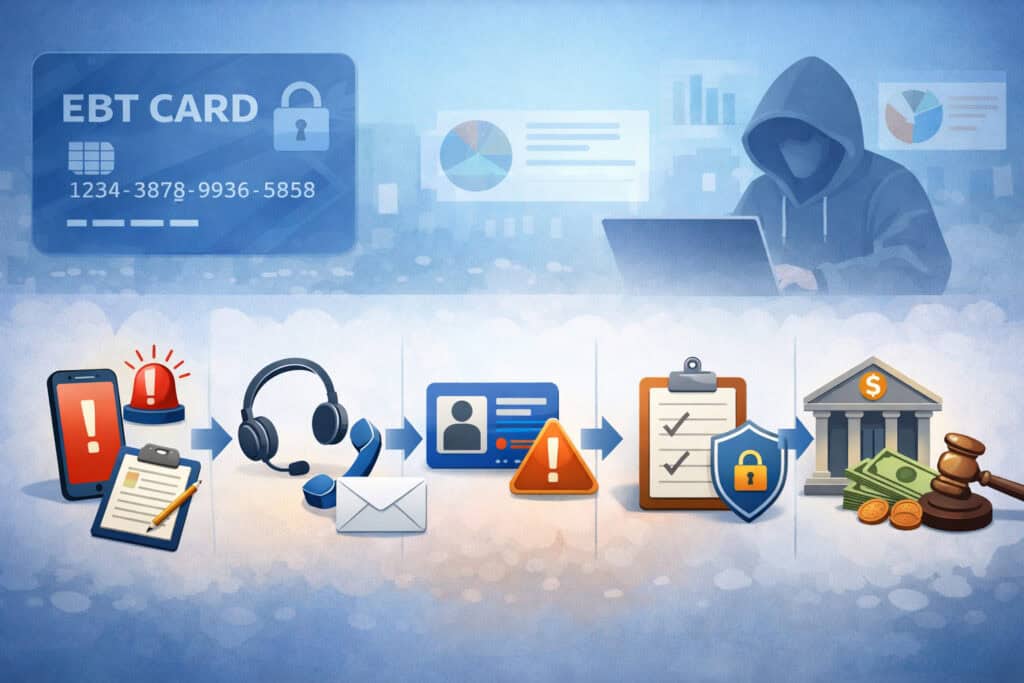
The EBT fraud reporting process usually follows a practical sequence: confirm suspicious activity, secure the account, contact official customer service, report the card status, change the PIN, notify the local benefits office, ask about a replacement card and benefit restoration, and keep detailed records.
The exact order may shift depending on the tools available to you, but these are the core steps most people need.
It helps to think of the process in three parts. First, protect what is left. Second, report what happened. Third, document everything in case follow-up is needed. You may need to speak with more than one official office, especially if card services and benefit case management are handled separately. That is normal.
Do not assume every representative can answer every question. One office may help with card security and replacement, while another handles your benefits case, identity verification, or review of fraudulent transactions. Stay patient, take notes, and keep asking what your next official step should be.
Step 1: Confirm suspicious activity and secure the account
Before you file a formal complaint, verify the issue through official transaction history or customer service. Once you confirm suspicious activity, move quickly to protect the account. If an official portal or app lets you freeze EBT card access, use that feature.
If not, call customer service immediately and explain that you need to report unauthorized EBT transactions or a compromised card.
Ask whether the representative can block further use, place a hold, or mark the card as compromised. If your card is missing, report it as a lost EBT card or stolen EBT card right away.
If the card is still in your possession but transactions are unauthorized, explain that clearly so they understand it may be a digital compromise rather than physical theft.
Change your PIN as soon as official tools allow. A new PIN does not undo fraudulent transactions that already happened, but it can help stop more from occurring if someone still has access. Choose a PIN that is hard to guess and not connected to birthdays, addresses, or repeated digits.
Step 2: Call official customer service and report the incident
Once the account is secured as much as possible, call official EBT customer service. Use the number on the back of the card or another official source you already trust.
Tell them clearly what happened. Keep your explanation simple and factual: when you notice the problem, whether the card is missing, whether you still have the card, and which transactions are unauthorized.
Important questions to ask include:
- Has the card been marked as lost, stolen, or compromised?
- Can the account be frozen or further protected?
- What is the process for getting an EBT replacement card?
- What fraud report or complaint reference number should I keep?
- What office should I contact next about my benefits?
- What documents or details should I submit?
If the representative gives you instructions, repeat them back to confirm you understood. Write down the date and time of the call, the name or identification number of the representative if provided, and any case or complaint number. If you are disconnected, call again and continue your notes.
The goal here is to create an official record and make sure the account is no longer exposed. Even if the representative cannot answer every question about benefit restoration, they can usually tell you how the report is logged and where to go next.
Step 3: Contact your local case office or official benefits agency
After customer service, contact your local case office, benefits agency, or assigned caseworker if one is available. This step matters because card servicing and benefits administration are not always the same thing. Reporting the card problem alone may not fully notify the office that manages your case or handles fraud review.
Tell the office that you need to report fraud on EBT card activity and explain whether the issue involves benefit theft, unauthorized charges, a stolen card, or suspected skimming. Ask what the office needs from you and whether there is a separate form, statement, or identity verification step required.
Be prepared for location-specific rules. Some programs may ask for a written statement. Others may direct you to an official portal, a caseworker, or an in-person visit. Replacement rules, review timelines, and benefit recovery options can vary, so avoid assuming that what worked for someone else will apply to your situation.
How to report unauthorized EBT transactions safely
If your card is still in your possession but transactions appear that you did not make, you are likely dealing with unauthorized EBT transactions rather than a simple lost-card situation.
That difference matters because it may point to skimming, PIN theft, or another account security issue. The safest response is to avoid guessing and report the incident through official channels right away.
Start by gathering the facts you can verify. You do not need to know exactly how the fraud happened. You only need enough information to explain what you saw. Review your transaction history using official resources and identify every suspicious entry.
Note when the activity first appeared and whether your card was with you at the time. Then contact official customer service to report the issue and ask how to protect the account immediately.
This is also the point where many people encounter scams. After suspicious activity appears, you may receive texts or calls claiming to “help” you restore benefits or verify your identity. Ignore those messages and work only through the phone number on your card, your official portal, or your case office.
Information to gather before you call
Having the right information ready can make the report smoother and reduce confusion during the call. You do not need to wait until you have every detail, but being organized helps.
Use this “Before You Call Customer Service” checklist:
- Your EBT card, if you still have it
- A photo ID if identity verification may be needed
- A list of suspicious transactions with dates and amounts
- Notes showing when you noticed the problem
- Any receipts or balance printouts you still have
- Screenshots from an official portal or app, if available
- A pen and paper or notes app for documentation
- Details about whether the card is missing or still with you
- Information about possible exposure, such as a suspicious card reader or scam message
- Your case number, if you know it
During the call, explain the facts in order. Start with the most urgent issue: “I have unauthorized transactions on my EBT account and need to secure it immediately.” Then give the details they request.
Do not read sensitive information to anyone who called you first. Only provide it when you initiate the call using verified official contact information.
Safe wording to use when reporting suspicious activity
When people are anxious, they sometimes tell a long story and lose the main point. A short, clear explanation often works better. You are not being rude by being direct. You are helping the representative understand the problem quickly.
A safe and effective way to explain the situation may include:
- I noticed transactions I did not authorize.
- My card is still in my possession.
- I need to secure the account and report fraud.
- I want to know the next official steps for replacement or review.
If the card is gone, say that clearly:
- My EBT card is missing.
- I need to report EBT card theft or loss immediately.
- Please tell me how to stop further use and request a replacement card.
If you suspect skimming or PIN theft, mention that too:
- I still have the card, but I think the account may have been compromised.
- I want to change my PIN and report possible fraud.
How to report stolen EBT benefits and what to expect next
When benefits are taken through fraud, the loss can feel immediate and deeply personal because it affects essential purchases. Reporting stolen EBT benefits is not only about telling the program what happened. It is also about asking what review or recovery options may be available in your location and under your program’s current rules.
Be realistic but persistent. Benefit restoration is not automatic everywhere, and there may be specific reporting rules, documentation requirements, or deadlines that apply.
Some locations may review the complaint and determine whether replacement or restoration is possible. Others may have narrower options. That is why official guidance from your program matters more than general online advice.
When you file an EBT fraud complaint, ask what the review process looks like. You can ask whether there will be a written form, a caseworker follow-up, identity verification, or a need for supporting documentation.
You can also ask how you will be notified about next steps. Keep in mind that the person handling the initial call may not be the same person reviewing your case later.
What readers should realistically expect during review
A fraud review may take time, and outcomes can vary. That can be frustrating, especially if the benefits were needed right away. It helps to go into the process with a calm, realistic understanding of what may happen.
You may be asked to:
- Confirm your identity
- Verify that the transactions were unauthorized
- Describe when you first noticed the problem
- Explain whether the card was lost, stolen, or still in your possession
- Provide screenshots, receipts, or transaction details
- Submit a written statement or formal complaint form
- Communicate with your caseworker or local office
The review may focus on whether the account showed suspicious activity, whether the report was made promptly, and what type of compromise appears to have happened. Some people are also asked whether they shared the card or PIN with anyone. Answer honestly and clearly.
Do not assume a delay means denial. Agencies often have separate steps for card replacement, case documentation, and benefit review. Keep notes, respond promptly to requests, and continue using official channels only.
How to document your complaint in a way that helps
Good documentation cannot guarantee an outcome, but it can make your complaint clearer and easier to review. The goal is not to create a perfect legal file. The goal is to keep a clean, accurate record.
Use this “Fraud Complaint Documentation” checklist:
- Date and time you noticed the issue
- Dates, amounts, and locations of fraudulent transactions
- Date and time you called customer service
- Name or identifier of each representative, if given
- Complaint, reference, or case numbers
- Date you changed your PIN
- Date you reported the issue to the local office or caseworker
- Screenshots from the official portal or app
- Receipts, balance printouts, or notices
- Notes about suspected skimming, phishing, or card theft
Keep all information together in one folder or envelope. If you speak with multiple offices, note which office told you what. That reduces confusion later and helps you stay consistent if you need to explain the situation again.
What to do if the card was physically stolen vs. digitally compromised
One of the most important distinctions in the SNAP EBT fraud reporting process is whether the card itself was physically stolen or whether the account was compromised while the card remained with you. The response overlaps in many ways, but the details you report can affect how the issue is handled.
If the card is physically missing, the priority is stopping further use and getting a replacement card. If the card is still with you, the priority is explaining that the account may have been compromised through skimming, PIN theft, or another unauthorized access method.
In both cases, you should change the PIN, contact official customer service, notify your local office, and document everything.
This difference also matters when you describe the incident. Saying “my card was stolen” is different from saying “my card is still with me but my account has unauthorized charges.” Be as accurate as you can.
If the card was physically stolen
If your EBT card is gone, do not spend time searching endlessly before reporting it. If you cannot quickly find it, treat it as a stolen EBT card or lost EBT card and report it immediately through official channels. Someone who finds or steals the card may attempt to use it quickly, especially if they know or can guess the PIN.
When you report the theft, explain:
- When you last had the card
- When you noticed it was missing
- Whether anyone else may have had access to it
- Whether the PIN may have been exposed
Ask customer service to block or deactivate the card and explain how to get an EBT replacement card. Then change the PIN if the system allows it and notify your local case office or benefits agency.
If the card was digitally compromised
Digital compromise can be harder to recognize because the card is still in your hand. You may not realize anything is wrong until you see unauthorized charges or an empty balance. In many of these cases, the likely causes include card skimming, PIN theft, phishing, or a fake customer service scam.
When you report the issue, make it clear that:
- The card is still in your possession
- The transactions were not authorized by you
- You suspect the account was compromised
- You want to protect the account immediately
Then ask whether you should receive a replacement card, whether the current card number should be deactivated, and how to file the fraud complaint. Change your PIN right away through official tools.
Documents and information to prepare before filing a complaint
Filing a complaint is much easier when your details are organized. You do not need a thick stack of paperwork, but you do need enough information to explain the issue clearly and respond to any follow-up. Preparing ahead also helps you feel more in control during a stressful situation.
At minimum, gather your card information through official materials, your recent transaction history, proof of identity if requested, and notes about what happened. If your program uses an official portal or mobile app, take screenshots of suspicious activity, account alerts, or balance changes. If you have receipts showing your last legitimate purchases, keep those too.
The most useful complaint files are usually the simplest ones: a short written timeline, transaction details, contact records, and official notices. Avoid mixing in random online advice, social media screenshots, or unverified claims. Keep your file clean and focused on facts.
A practical complaint-prep checklist
Use this checklist before you file EBT fraud complaint paperwork or complete a formal report:
- Card number details only through official, secure handling
- Photo ID if required for identity verification
- Case number or client number, if you have it
- Recent transaction history from an official source
- List of fraudulent transactions
- Receipts from legitimate purchases
- Screenshots of portal alerts or suspicious transactions
- Notes about when you discovered the fraud
- Notes about any scam call, text, or suspected skimming event
- Prior complaint or reference numbers from customer service
- Contact information for your caseworker or local office
Keep originals safe and provide copies or summaries when appropriate. If you are asked to fill out a statement, write clearly and stay factual. Do not guess when you do not know something. It is fine to say, “I do not know how access was gained, but these transactions were unauthorized.”
How detailed your written statement should be
If your local office asks for a written statement, keep it organized and focused. A good statement usually includes when you noticed the issue, whether the card was missing or still with you, what suspicious transactions you found, what official steps you already took, and what help you are requesting. You do not need dramatic language. Clear facts are more helpful.
A useful structure looks like this:
- Date and time you noticed suspicious activity
- Whether the card was in your possession
- Summary of unauthorized transactions
- Date you called official customer service
- Date you changed the PIN
- Date you notified the case office
- Any suspected cause, such as skimming or phishing, if relevant
Keep the statement consistent with what you told customer service. If you are uncertain about a detail, say so rather than guessing. Consistency builds trust and reduces confusion during review.
Common mistakes to avoid when reporting EBT fraud
People dealing with fraud are often under pressure, and that is exactly when mistakes happen. Some mistakes delay the report. Others accidentally expose the account to even more risk. Knowing what to avoid can make the process safer and smoother.
The biggest mistake is waiting. People sometimes hope the issue will correct itself, assume a small charge is harmless, or decide to deal with it later. But small unauthorized charges can be early warning signs, and delays may make the situation harder to untangle.
Another common mistake is relying on unofficial customer service numbers, search results, or social media comments instead of verified program resources.
Sharing the PIN is another major problem. Even if someone claims to be helping you, no one should pressure you to give that information in an unexpected text, email, or incoming call. A related mistake is failing to document the issue. Without notes, it becomes harder to remember who said what and when.
Mistakes that can slow down your case
Try to avoid these common problems:
- Waiting too long to report suspicious activity
- Ignoring small unauthorized transactions
- Calling a fake number found in a random message
- Clicking links in phishing texts or emails
- Sharing your PIN with anyone
- Failing to change the PIN quickly
- Not writing down complaint or case numbers
- Assuming one office has notified every other office
- Throwing away receipts too soon
- Guessing at details instead of sticking to facts
Each of these mistakes can make the process harder, but none of them means you should give up. If you made one, focus on what you can do now. Secure the account, report the fraud through official channels, and begin documenting the problem.
Emotional mistakes: panic, shame, and silence
Not all mistakes are practical. Some are emotional. People sometimes feel embarrassed, especially if they responded to a phishing text or missed an early warning sign. That shame can lead to silence, delay, or half-reporting the problem. Fraudsters count on that.
Remember this: reporting fraud is not an admission of failure. It is the correct step. Scams are designed to confuse people, and tampered card readers are designed to be hard to spot. What matters most is how quickly you protect the account once you know something is wrong.
Another emotional mistake is trying to solve everything alone. You do not have to figure out the technical cause before calling. You do not need to investigate the merchant or confront anyone. Your role is to report the issue, secure the account, and follow official guidance. Let the program handle the rest of the review.
How to protect your benefits going forward
Once the immediate crisis is handled, the next step is prevention. No system is perfect, but there are practical ways to reduce the risk of future benefit theft. The goal is not to live in fear. It is to build simple habits that make fraud harder.
Start with the basics: protect your PIN, monitor your balance often, use only official portals and apps, and stay alert to signs of tampered card readers. If official tools allow account alerts, turn them on. If you can change your PIN regularly, consider doing so, especially after traveling, using unfamiliar machines, or responding to any suspicious message.
It also helps to slow down when something feels off. Fraud often works by creating urgency. A text that says your benefits will disappear in minutes is trying to rush you. A loose card reader is counting on you not noticing. A fake representative wants you to act before verifying who they are.
Fraud prevention habits that really help
Use this “How to Protect Your Benefits Going Forward” checklist:
- Keep your PIN private and never write it on the card
- Avoid easy-to-guess PINs
- Cover the keypad when entering your PIN
- Check balances and transaction history often
- Turn on official mobile app alerts if available
- Use only official EBT customer service contact information
- Avoid clicking links in unexpected texts or emails
- Inspect card readers before using them
- Report suspicious readers or scams to staff and official channels
- Replace the card or change the PIN quickly if compromise is suspected
Try to make account monitoring part of your normal routine, not just something you do after a crisis. A quick review of your transaction history can help you catch suspicious activity early.
Scam warning signs and safer habits in daily use
Many fraud attempts can be avoided by building one habit: pause before responding. Whether it is a message, call, or suspicious machine, take one moment to verify before acting. That pause protects you.
Watch for scam warning signs such as:
- Urgent threats about losing benefits
- Requests for your PIN or full card details
- Links that take you to unknown websites
- Callers who pressure you not to hang up
- Messages that promise fast restoration if you “verify” your account
- Customer service numbers that do not match official materials
Safer daily habits include using familiar stores when possible, checking for unusual hardware on card readers, shielding the keypad, and reviewing receipts before leaving. If you use an official portal or app, log out when finished and keep your phone secure.
Frequently Asked Questions
Q1. How do I report fraud on EBT card activity if I am not sure the transaction is really fraudulent?
Answer: Start by checking your transaction history through an official source, such as the phone number on the card, an official portal, or an approved app. Compare the date, amount, and merchant information with your own recent purchases.
If you still do not recognize the transaction, report it right away through official customer service. You do not need complete proof before you call. You only need a reasonable concern based on suspicious activity.
Q2. What should I do first if my EBT card is missing?
Answer: Treat it like a lost EBT card or stolen EBT card and report it immediately through official customer service. Ask that the card be blocked or deactivated and find out how to request an EBT replacement card.
Then notify your local case office or benefits agency and document everything, including when you noticed the card was missing.
Q3. What if my card is still with me but my benefits were used by someone else?
Answer: That may mean your account was digitally compromised through skimming, PIN theft, or another unauthorized access method.
Review your transaction history, change your PIN right away using official tools, contact official EBT customer service, and report unauthorized EBT transactions. Then tell your local office that the card remained in your possession but the account appears compromised.
Q4. Can I freeze EBT card access myself?
Answer: Some programs may offer official account controls through a portal or mobile app, while others may not. If your official tools allow you to lock or freeze EBT card use, do that immediately when you notice suspicious activity.
If no self-service option is available, call official customer service right away and ask them what protections can be applied to the account.
Q5. How do I report stolen EBT benefits?
Answer: Start with official customer service to secure the account and create a fraud report. Then contact your local case office or official benefits agency and ask about the process for reporting benefit theft, submitting a complaint, and requesting any available review or restoration options. Rules can vary by program and location, so always follow the instructions from your official office.
Q6. Will I automatically get my benefits back after filing a complaint?
Answer: Not always. Benefit restoration, review steps, and replacement rules can vary depending on your program and location. That is why it is important to ask your official office what options are available in your case, what documents they need, and how they will notify you about the outcome.
Q7. What information should I have ready before I call customer service?
Answer: Have your card available if you still have it, a list of suspicious transactions, your case information if known, notes about when you discovered the issue, and a way to write down complaint numbers and instructions. Screenshots from an official portal or app, receipts, and balance records can also help.
Q8. Should I change my PIN even if I do not know how the fraud happened?
Answer: Yes. If you suspect any unauthorized access, changing your PIN right away is a smart protective step. Use official tools only, and choose a PIN that is not easy to guess. Changing the PIN may help stop further misuse, especially if the account was exposed through PIN theft or phishing.
Q9. What if I accidentally gave information to a fake customer service caller?
Answer: Stop contact immediately. Do not send anything else and do not keep arguing with the caller. Use the number on the back of your card or another verified official source to contact real customer service, explain what happened, secure the account, change your PIN, and begin the fraud reporting process.
Q10. How long should I keep records related to the fraud complaint?
Answer: Keep everything until the issue is fully resolved and you are sure no further review, appeal, or follow-up is needed. That includes your notes, complaint numbers, screenshots, receipts, written statements, and any notices from customer service or your local office. Keeping a complete file protects you if questions come up later.
Q11. Do I need to know whether it was skimming, phishing, or card theft before I report it?
Answer: No. You do not need to identify the exact fraud method before reporting. It is enough to describe what you observed: missing card, unauthorized charges, suspicious text, compromised PIN, or unusual transaction history. Official staff can help determine what category fits best and what steps apply.
Q12. Should I ignore a small unauthorized transaction if most of my balance is still there?
Answer: No. Small unauthorized charges can be a test run by someone who is checking whether the account works. Reporting even a small suspicious transaction can help protect the remaining balance and create an early official record of the issue.
Conclusion
If you need to report fraud on EBT card activity, the safest response is also the clearest one: verify the suspicious activity through official sources, protect the account immediately, call official customer service, notify your local benefits office, ask about replacement card and benefit recovery options, and document every step.
Whether the issue involves a stolen card, unauthorized charges, skimming, PIN theft, or a scam message, fast action can help protect your benefits and strengthen your complaint.
Try not to let stress push you toward risky shortcuts. Do not trust random phone numbers, unexpected links, or anyone asking for your PIN.
Do not wait for the problem to “sort itself out.” And do not assume you need to solve the mystery before making the report. Your role is to notice, secure, report, and keep records.