Trying to withdraw money from my EBT card for free is a practical concern for anyone who wants to stretch every dollar of cash assistance. Even small ATM surcharges can add up fast, especially when you need to make several withdrawals in a month.
A few dollars here and there may not seem like much at first, but repeated fees can reduce the amount available for rent, transportation, hygiene items, school needs, and other essentials.
That is why it helps to understand where EBT cash benefits can be accessed without extra charges, how to check whether an ATM is fee-free before you continue, and what steps can help you avoid unnecessary costs.
The goal is not just to find a machine and withdraw money. The real goal is to protect your benefit balance, avoid avoidable fees, and use your benefits in a safe and legal way.
The answer is not the same for every cardholder. Fee-free access often depends on the program connected to your card, the ATM network listed on your card, the cardholder portal, the retailer’s policy, and the rules tied to your benefit account.
Some people may have access to a free ATM for EBT cash withdrawal through approved in-network ATMs. Others may have cash-back options at certain retailers where allowed. Some may face fees if they use an out-of-network machine or check their balance the wrong way.
This guide walks through the legitimate ways to access cash benefits, how to find EBT free ATM locations, how to confirm whether a transaction will be free before you finish it, and what to do if something goes wrong.
It also explains the difference between benefits that can be withdrawn as cash and benefits that cannot, so you can avoid confusion and denied transactions.
Understanding What Can and Cannot Be Withdrawn From an EBT Card
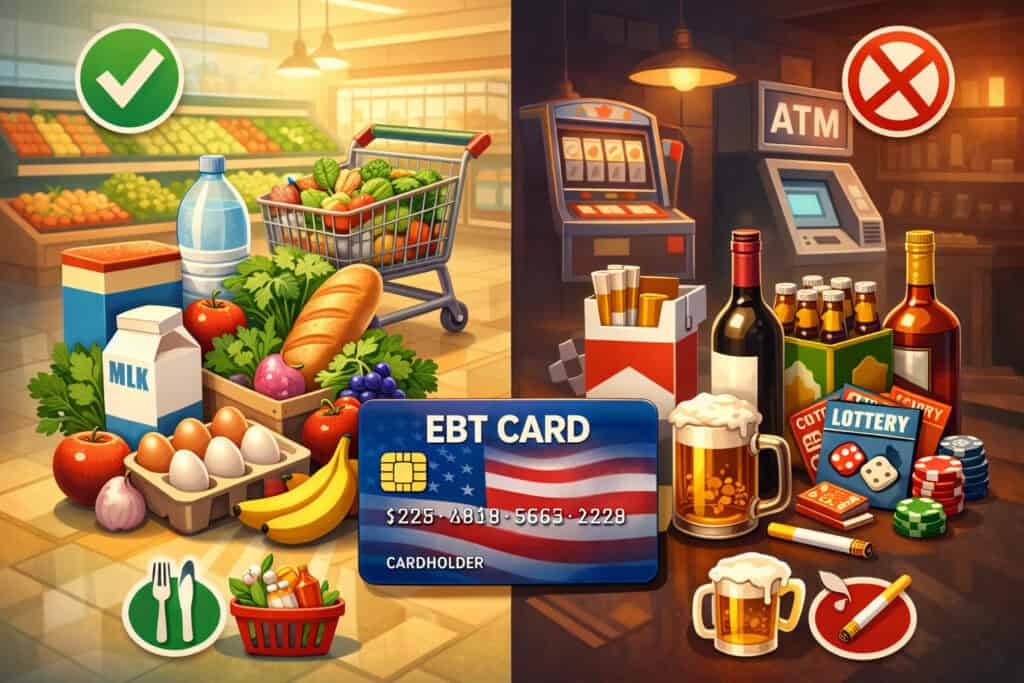
Before looking for places to withdraw cash from an EBT card for free, it is important to understand that not every benefit on an EBT card works the same way. Many people use one card to access different benefit types, but the rules for each benefit category are not identical.
That difference affects where the card can be used, what can be purchased, and whether any part of the balance can be withdrawn as cash.
In simple terms, EBT cash benefits are different from food benefits. Cash benefits may be available for approved cash access methods such as ATM withdrawals or retailer cash back, depending on the program rules tied to the card.
Food benefits, on the other hand, are meant for eligible food purchases and usually cannot be withdrawn as cash. If a person tries to take out money from the wrong benefit balance, the transaction may be denied even if the card itself is valid and active.
This is one reason people sometimes get confused when an ATM accepts the card but still does not complete the withdrawal. The issue may not be the ATM itself.
It may be that the available balance is in food benefits rather than cash assistance. Checking your benefit balance before starting a transaction can save time and help avoid mistakes.
Another important point is that benefit access rules vary. A cardholder may assume that one location or method always works because it worked before, but ATM networks, retailer policies, authorized fees, and state program rules can differ.
That is why the safest approach is to confirm your available cash balance and use official tools connected to your program before making a withdrawal.
EBT Cash Benefits vs. Food Benefits
Food benefits are generally designed for approved purchases at authorized stores. They are not meant to be turned into cash at an ATM. Cash benefits, by contrast, may be used in approved ways to access money directly.
That is the key difference. If you are searching where to withdraw EBT cash for free, you are looking for access to the cash portion of your account, not the food portion.
Many cardholders keep both balances on the same card. That can make it seem like all the benefits are interchangeable, but they are not. When you insert your card into an ATM, the machine may only work with the cash assistance side of the account. If there are no available cash benefits, the ATM may say there are insufficient funds or decline the request.
It is also possible to run into confusion at a store register. Some locations may allow a cash-back option on eligible cash transactions, while others may not offer it at all. That does not mean the card is broken. It simply means the location or transaction type is not set up for that kind of access.
Why This Difference Matters Before You Use an ATM
Knowing whether you have cash benefits available matters because it affects every part of the transaction. It affects whether the ATM will process the request, whether you can request a specific amount, whether a retailer cash-back option might work, and whether a decline could trigger a fee in some situations. A little preparation can prevent a frustrating experience at the machine.
For example, someone may believe they can withdraw funds because their card balance looks high overall. But if most of that balance is food benefits rather than cash assistance, the ATM withdrawal still may not go through. That can waste time and may even create a fee risk if the machine or program charges for certain declined or balance-related transactions.
This distinction also helps with budgeting. When you know exactly how much is available as cash, you can plan fewer, better-timed withdrawals and avoid taking out small amounts multiple times. That can matter a lot when you are trying to reduce surcharges over the course of the month.
The bottom line is simple: before searching for an ATM that accepts EBT cards without fees, first confirm that you are working with an actual cash benefit balance. That one step can make the rest of the process easier, safer, and less expensive.
Where Can You Withdraw EBT Cash for Free?
The honest answer is that where to withdraw EBT cash for free depends on your program’s approved access options. There is no single universal list of fee-free ATMs that applies to every cardholder everywhere.
Some programs offer access through certain in-network ATMs. Some connect cardholders to approved ATM locator tools. Some allow certain retailer cash-back transactions for cash benefits. Others may place tighter limits on where or how cash can be withdrawn.
The best fee-free options often include:
- In-network ATMs connected to the logos or payment network shown on the card
- ATMs listed inside the official cardholder portal or program app
- Locations provided by customer service through the number on the back of the card
- Retailer cash-back options where allowed for cash benefits
That means the safest way to find EBT cash withdrawal locations is not to rely on random online lists, social posts, or assumptions based on another person’s experience. Instead, use official tools connected directly to your card and program. Those tools are more likely to reflect current rules, available ATM partners, and accurate fee information.
Even when a machine is compatible with your card, compatibility does not always mean fee-free access. An ATM may accept the card but still impose a surcharge. In some cases, your program may also have its own fee structure for certain transactions outside the preferred network.
That is why reading the ATM screen matters so much. If a surcharge appears before you approve the transaction, you can cancel and look for a better option.
In-Network ATMs and Approved ATM Locators
For many cardholders, the most reliable way to withdraw money from my EBT card for free is to use an in-network ATM identified through official program resources. Your card may display one or more network logos on the front or back.
Those logos can help point you toward compatible ATM systems, but they should not be your only source of confirmation. A machine can be network-compatible and still charge a surcharge.
The strongest approach is to combine the network information on your card with your official ATM locator, cardholder portal, or customer service line. Many programs provide a search tool that helps users locate participating machines.
Some portals or apps may also show nearby machines and may indicate which locations are more likely to be surcharge-free for cash withdrawals.
When using a locator, check more than one ATM if possible. The nearest machine is not always the best one. A second location a short distance away may help you avoid a fee.
Also pay attention to whether the machine is inside a bank branch, a grocery store, a convenience store, or a standalone kiosk. The location itself can sometimes affect the chance of extra charges.
Retailer Cash-Back Options Where Allowed
Another possible way to access cash benefits without paying an ATM surcharge is through retailer cash back, but this option varies and should never be assumed.
Some retailers may allow cash back during a purchase when the transaction is tied to eligible cash benefit access. Other retailers may not offer it at all, may set their own limits, or may not support it for your specific program.
This method can be helpful because it may reduce the need for a separate ATM trip. If available, it may also help someone avoid an ATM surcharge altogether. But it is important to be careful here.
Cash-back availability is not universal. The amount you can receive may be limited. The store may require a purchase. The register system may not support the transaction. Your benefit program may also have rules that affect how or when it can be used.
Because policies vary, it is smart to ask politely before starting the transaction. Ask whether cash back is offered for cash benefit transactions and whether there is a limit. Then watch the screen and receipt closely. If the terms are unclear, do not guess.
The safest mindset is this: retailer cash back may be a useful option in some places, but it is not guaranteed. Always verify through the store and your official program tools before relying on it as your main method.
How to Find EBT Free ATM Locations Using Official Tools
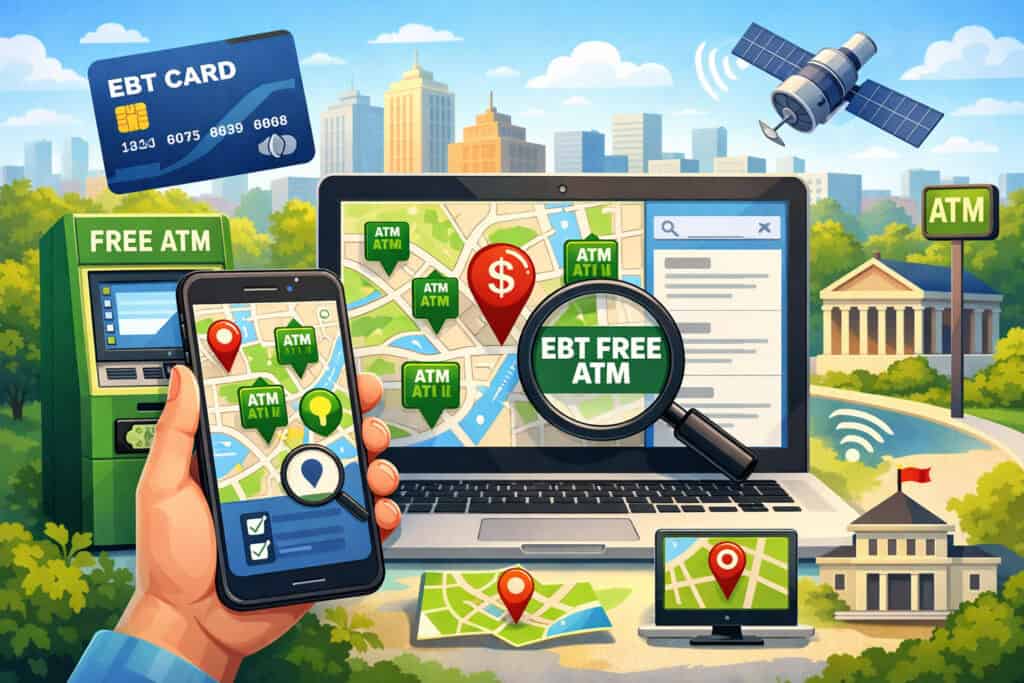
When you need EBT free ATM locations, the most reliable source is your own program’s official information. That means starting with the card itself, then checking the cardholder portal or app, and using customer service if needed. This approach helps you avoid outdated lists, incorrect advice, and surprise charges.
A good search process should answer five questions:
- What network does my card use?
- Does my program provide a preferred ATM locator?
- Is the ATM likely to be surcharge-free?
- Is there a daily withdrawal limit or other transaction limit?
- What does the machine screen say before I approve the withdrawal?
That last question matters because even an ATM you expected to be free may show a surcharge prompt. If the screen says there is a fee, you still have the chance to cancel the transaction before confirming it. This is one of the easiest ways to avoid paying an unnecessary charge.
Keep in mind that official tools do more than show locations. They can also help with your balance inquiry, recent transactions, and program notices.
If your portal or app includes account alerts, turning them on can help you keep track of successful withdrawals, denied attempts, and other activity. That makes it easier to spot issues quickly and protect your card.
Step 1: Check the Back of the Card and the Cardholder Portal
The first step is simple but often overlooked. Turn your card over and read the back carefully. You may see customer service information, network logos, website details, or instructions for account access. That small amount of information can help you find the correct official resources instead of relying on unofficial fee lists.
The network logos on the card can help identify which ATMs may be compatible. The customer service number can help confirm whether certain machines are part of a preferred network.
If your card lists a website or cardholder portal, use that source first. Portals often include account information, transaction history, balance details, and sometimes an approved ATM search feature.
If there is a mobile app tied to the same system, that can be even more convenient. Some apps provide location-based ATM results and account alerts that help you monitor cash assistance withdrawal activity. Just make sure you are using the official app linked by your program or portal.
Step 2: Use an Approved ATM Locator and Confirm On-Screen Fees
Once you know the network or portal linked to your card, the next step is to use the approved ATM locator tied to that program or network. Search for nearby options and compare them.
One machine may be closer, but another may be more likely to offer a surcharge-free ATM transaction. The locator may also help you identify which machines are commonly used by cardholders in your program.
After choosing a machine, the most important checkpoint happens at the ATM screen. Read every message carefully before completing the transaction. Some machines clearly show an ATM surcharge before asking for final approval.
If you see a fee and do not want to pay it, cancel the transaction and try another location. Never assume the machine is free just because it is compatible or because someone else said it worked for them.
Also pay attention to the withdrawal options offered. Some machines only allow certain denominations or preset amounts. If your program has a daily withdrawal limit or transaction cap, your chosen amount may need to fit within both the ATM’s options and your account rules.
Once the transaction is complete, keep the receipt and check your balance afterward. That record can help if there is ever a dispute, an unexpected fee, or a missing cash issue.
Understanding Fees, Limits, and Why Small Details Matter
If you want to withdraw cash from an EBT card for free, you need to understand where charges can come from. Many people think only about the ATM operator’s fee, but that is not the only possible cost.
Depending on the program, fees may also relate to out-of-network use, extra balance checks, declined transactions, or repeated withdrawals.
Not every program charges the same way. Some cardholders may get a certain number of free transactions in a period. Others may only avoid charges by staying within an approved ATM network.
Some machines charge a surcharge directly on the screen, while other costs may come from program rules. That is why reading both the on-screen prompt and your official account materials matters.
A few dollars lost to fees may not feel urgent at the moment, especially when you need cash right away. But over time, those losses reduce the value of your benefits.
Someone who makes four small withdrawals in a month could pay much more in surcharges than someone who plans one or two larger fee-free withdrawals. Careful timing and smart location choices can make a real difference.
ATM Surcharge Fees, Program Fees, and Out-of-Network Risks
An ATM surcharge is a fee charged by the ATM operator for using that machine. This is the fee you often see on-screen before you confirm the transaction. If you approve it, the charge is usually added immediately. This is why the screen prompt matters so much. It gives you a last chance to stop the transaction if the machine is not free.
Program fees are different. These may be set by the benefit program or card issuer for certain types of transactions, such as extra withdrawals, out-of-network use, or other non-preferred activity.
Even if the ATM itself does not show a surcharge, your program may still apply rules that affect the total cost of using a certain machine or performing a certain account action.
Out-of-network withdrawals can create the biggest risk because they may expose you to both types of costs. A machine outside the preferred network may charge its own fee, and your program may also treat it differently than a preferred machine. That is why using official EBT cash withdrawal locations is usually the best first step.
Balance Inquiries, Declined Transactions, and Daily Limits
Some cardholders focus only on withdrawal fees and forget that other transactions may also matter. Depending on your program, a balance inquiry at an ATM may count differently than checking your balance through the portal, app, or customer service line.
A denied transaction may also carry consequences in some cases, especially if repeated attempts are made at the wrong machine or for an amount above your available balance.
This is why it helps to know your exact cash balance before you go. If you try to withdraw more than the available amount, the transaction may be declined.
If the ATM only offers preset values that do not match your balance, you may need to try another amount or another machine. Planning ahead can reduce the chance of wasted trips and unnecessary charges.
You should also know your transaction limits and daily withdrawal limit. Even if you have enough money in your account, the program or ATM may limit how much you can take out in one day or one transaction. This can affect how you time your withdrawals and whether you need to use multiple days or methods to access your funds.
Keeping receipts and reviewing your transaction history after each withdrawal can help you stay organized, especially if you are tracking multiple transactions over the month.
Retailer Cash Back: When It May Help and What to Check First
Retailer cash back can be a useful option for some cardholders who want to avoid ATM fees, but it should be approached carefully. It may be available at certain stores when using eligible cash benefits, yet it is not something you should count on automatically. Availability can vary by retailer, register system, transaction type, and program rules.
The main advantage of retailer cash back is convenience. You may be able to get part of your cash benefits during a regular shopping trip, which can save time and reduce the need to search for a separate ATM.
In some situations, it may also help you avoid the fee risk that comes with standalone ATM kiosks, which are more likely to display surcharges.
That said, there are important limits. Some retailers only allow small cash-back amounts. Some require a purchase. Some may not offer cash back on benefit-related transactions at all. Others may have policies that differ by location. Because of that, it is better to treat retailer cash back as a possible option, not a guaranteed solution.
How to Ask About Cash Back Without Guessing
If you want to try this method, the best first step is to ask before the transaction begins. A simple question at the register can save confusion later: “Do you offer cash back for cash benefit transactions, and is there a limit?” That keeps things clear and helps you avoid assuming the store can do something it may not support.
If the answer is yes, still pay attention during checkout. Watch the register prompts, read the receipt, and confirm the final amount. Make sure the cash-back amount matches what you expected. If anything looks unclear, ask for clarification before leaving the store.
Another good habit is to compare this option with the nearest approved ATM. A store may offer only a small cash-back amount, while a nearby surcharge-free ATM may let you withdraw exactly what you need. In other situations, a small cash-back option may be perfect because it helps you avoid making a special ATM trip.
When Retailer Cash Back May Not Be the Best Option
Even where retailer cash back is offered, it may not always be the best choice. For example, if the store only allows a low amount, you might need to repeat the process at multiple locations to get enough cash.
That can be inconvenient and may lead to extra spending if purchases are required each time. In that situation, using an approved ATM that accepts EBT cards without fees could be simpler and more predictable.
There is also the issue of privacy and timing. Some people may not want to discuss benefit-related cash access at a busy register. Others may find that store policies change by shift, system update, or location. That is another reason not to rely on one method alone.
It also helps to think about budgeting. If you use retailer cash back casually without tracking it, those smaller cash amounts can be harder to monitor. ATM receipts and portal records may make it easier to manage withdrawals over the month.
For many cardholders, the best approach is a mix: use official ATM tools as the main strategy and retailer cash back only when it is clearly allowed, convenient, and truly lower cost.
What to Do When Something Goes Wrong at the ATM
Even when you do everything right, ATM problems can still happen. The machine may reject your card, the transaction may be declined, or the ATM may show a fee you were not expecting.
In more frustrating cases, the machine may keep the card or fail to dispense cash even though your balance changes. Knowing how to respond can protect both your money and your peace of mind.
The first rule is to stay calm and avoid repeating random attempts. Repeated failed transactions can make things worse, especially if the problem is an incorrect PIN, a machine issue, or a limit you did not realize was in place.
Instead, pause and check what the screen actually says. The message often gives a clue about what went wrong.
The second rule is to document everything. Write down the ATM location, date, time, amount requested, and any message on the screen. Keep any receipt, even if it only shows a partial transaction. That information is extremely helpful if you need to call customer service or dispute a charge.
Card Not Accepted, Transaction Declined, or Wrong PIN
If the ATM says your card is not accepted, first check whether the machine supports the network listed on your card. Compatibility matters. A machine may look like a standard ATM but still not work with your program’s network.
If you are unsure, use your official locator or call EBT customer service before trying again at random locations. If the transaction is declined, check your benefit balance, your cash balance specifically, and your requested amount.
A decline can happen because the amount is too high, the machine only offers certain withdrawal increments, you reached a limit, or the card is being used at a machine outside the approved setup. A declined transaction does not always mean there is a problem with your account.
If you entered the wrong PIN, stop after the first or second failed attempt and make sure you are using the correct one. Repeated incorrect entries can lock access temporarily or lead to more serious account problems. If you forgot your PIN, use the official customer service line or cardholder portal options for secure help.
Card Retained, Cash Not Dispensed, or Unexpected Fee
If the ATM keeps your card, do not leave without noting the location and machine information. If the ATM belongs to a bank branch and staff are available, ask immediately what steps to take.
In many cases, you will still need to contact your card issuer or program support to protect the account and request a replacement card if the card cannot be recovered quickly.
If the cash is not dispensed but your balance changes, contact customer service as soon as possible. This kind of issue should be reported right away.
Keep the receipt if one is printed, and record the exact amount, time, and ATM location. Do not assume the adjustment will happen instantly. Follow your program’s dispute process and monitor your account until the issue is resolved.
If a fee appears unexpectedly, stop before confirming if the screen still gives you that option. If the fee was already charged, check your receipt and portal records. Then contact customer service and ask whether the machine should have been fee-free or whether the charge came from the ATM operator.
Staying Safe: PIN Security, Fraud Prevention, and Smart ATM Habits
Finding a free ATM for EBT cash withdrawal is only part of the job. Safety matters just as much. A fee-free machine is not a good option if it is in an unsafe location, looks tampered with, or puts your card information at risk. Protecting your benefits means protecting both your cash and your account details.
Fraud prevention starts with your PIN. Never share it. Never say it out loud at the machine. Cover the keypad with your hand when entering it. If anyone is standing too close, wait or choose another machine. A stolen PIN combined with a stolen card can lead to fast losses.
It also helps to inspect the machine before using it. If the card reader looks loose, the keypad seems unusual, or anything appears attached that should not be there, do not use it. Choose another location.
Standalone ATMs in poorly monitored places may carry a higher risk than machines inside staffed branches or busy, well-lit stores.
Safe ATM Use and Scam Awareness
A good ATM location is well lit, visible, and preferably monitored. If you feel rushed, pressured, or unsafe, leave and find another machine. No withdrawal is worth risking your safety. Try to withdraw during daylight or at times when the area is active and secure.
Watch out for scam situations too. Be cautious if someone offers help at the ATM, asks you to retry your transaction in a specific way, or claims the machine is free when the screen says otherwise. Always trust the official on-screen prompt and your own account tools over advice from strangers nearby.
You should also avoid relying on random online maps or social posts promising universal EBT free ATM locations. Use official resources instead. Scammers and outdated posts can point people to the wrong places or create confusion about fees.
Lost Card, Stolen Card, and Ongoing Account Monitoring
If your card is lost or stolen, report it immediately using the official customer service number. The faster you act, the faster your account can be protected.
Delaying can increase the risk of unauthorized withdrawals, especially if someone guesses or learns your PIN. Ask about next steps for freezing the card, reviewing recent activity, and getting a replacement card.
Regular monitoring helps even when the card is not missing. Check your balance and transaction history often. Look for withdrawals you do not recognize, failed attempts you did not make, or other unusual activity. Early reporting usually gives you the best chance of fixing problems quickly.
You should also keep your contact information updated with the program if required. That way, you can receive notices, alerts, or account updates that may affect your cash benefit access.
Good monitoring habits help with more than fraud prevention. They also help you budget better and notice patterns, such as which ATMs tend to be free and which ones usually are not.
Practical Checklists to Help You Avoid Fees and Problems
When you are under pressure to get cash quickly, it is easy to forget small steps that could save money and prevent mistakes. A simple checklist makes the process easier. Instead of relying on memory, you can follow a repeatable routine each time you need to access your benefits.
These checklists are meant to help you reduce avoidable fees, confirm whether a machine is really free, handle surprise charges, and stay safer at ATMs. They also work well if you are helping a family member learn how to manage cash withdrawals more carefully.
Before You Withdraw and How to Confirm It’s Free
Use this Before You Withdraw checklist before heading out:
- Confirm that you have available EBT cash benefits, not just food benefits
- Check your current benefit balance
- Review your daily withdrawal limit or other transaction limits
- Bring your card and make sure you know your PIN
- Use the official portal, app, or customer service line to find likely fee-free options
- Pick a safe, well-lit ATM location
- Have a backup ATM in case the first one is unavailable or shows a surcharge
Use this How to Confirm It’s Free checklist at the machine:
- Check whether the ATM appears to match your approved network or locator results
- Read every screen carefully
- Look for any ATM surcharge notice before confirming
- Cancel immediately if the fee is not acceptable
- Confirm the withdrawal amount before final approval
- Keep the receipt
- Check your balance afterward to confirm the transaction posted correctly
What to Do If You Were Charged and Safe ATM Use Checklist
Use this What to Do If You Were Charged checklist if a fee appears:
- Keep your receipt
- Write down the ATM location, date, time, and amount
- Check whether the fee came from the ATM operator or your program rules
- Review recent transactions in your portal or app
- Call official customer service for clarification
- Ask whether that ATM should have been fee-free
- Monitor your account until the issue is fully resolved
Use this Safe ATM Use checklist each time:
- Choose a visible, well-lit machine
- Inspect the card reader and keypad for tampering
- Cover the keypad when entering your PIN
- Keep distance from strangers offering help
- Put away cash and receipt immediately
- Do not count money in public
- Leave if anything feels unsafe or suspicious
These routines may seem simple, but they can save both money and stress over time.
Real-World Examples of How to Reduce Fees
Sometimes the easiest way to understand fee-free access is to see how it works in everyday situations. Real-world comparisons can show how small choices affect your total costs over time. The examples below are general, but they reflect common decisions people face when trying to withdraw money from my EBT card for free.
Example 1: A person needs cash quickly and sees a nearby standalone ATM in a convenience store. Before using it, they check their official app and notice a different approved ATM a few blocks away.
The convenience store machine is closer, but the approved machine is more likely to be surcharge-free. By taking a little extra time, they avoid a fee and keep more of their benefits.
Example 2: Another person is already buying household items at a retailer and asks whether cash back is available for cash benefits. The cashier confirms that it is, but only up to a small amount.
That works fine because the person only needs a little cash that day. Instead of using a separate ATM, they complete one transaction and skip the extra trip.
Example 3: A cardholder tries to withdraw an amount that does not match the machine’s preset options. The transaction is declined. Instead of trying again several times, they check their balance and choose a different amount at another approved ATM. That helps avoid repeated errors and keeps the process simple.
Comparing ATM Options the Smart Way
A smart comparison is not just about distance. It should include safety, likely fees, withdrawal options, and convenience. For example, one ATM may be free but located in an area that feels unsafe at night. Another may be inside a well-lit store or bank branch and be easier to use comfortably. That difference matters.
A good comparison process looks like this:
- Check your official locator for nearby approved machines
- Compare at least two or three options
- Think about safety, travel time, and machine location
- Confirm whether the ATM screen shows a surcharge
- Choose the option that balances cost, security, and convenience
This approach makes it easier to find the best EBT cash withdrawal locations instead of the first one you happen to pass.
Planning Withdrawals to Avoid Repeated Small Fees
One of the biggest money-saving habits is planning withdrawals instead of making them reactively. Someone who takes out small amounts several times in a month may face more fee risk than someone who checks the balance, reviews limits, and withdraws a more practical amount at a fee-free machine.
That does not mean everyone should take out a large amount at once. Safety, budgeting style, and local conditions all matter. But it does mean the timing should be intentional.
If you know your nearest approved machine, your limit, and your likely spending needs, you can make fewer stressful trips and reduce the chance of paying avoidable fees.
A 30-Day Money Access Plan to Reduce Fees Over Time
If you want to stop losing money to avoidable surcharges, it helps to think beyond one withdrawal. A 30-day plan can make cash access more predictable and less stressful. The idea is simple: know your options, track your patterns, and reduce unnecessary transactions over time.
Week 1 should focus on setup. Check your official portal or app, confirm your current cash balance, find your preferred ATM options, and save customer service information. If account alerts are available, turn them on. Write down your likely EBT free ATM locations and any retailer options you have personally confirmed.
Week 2 is about tracking. Notice when you usually need cash and how much you typically withdraw. If you often make several small withdrawals, ask yourself whether better timing could reduce those trips. Review your receipts and transaction history so you can spot patterns.
Week 3 is the testing phase. Try using your most promising fee-free option first. If you have a backup ATM or retailer method, test that too when appropriate. Compare convenience, safety, and whether the transaction was truly free.
Week 4 is for adjustment. Based on your experience, choose a main withdrawal method and one backup. Plan future withdrawals around those known options. The goal is not perfection. The goal is to create a simple system that protects your balance.
Weekly Fee-Reduction Habits That Add Up
Use these habits throughout the month:
- Check your cash balance before every withdrawal
- Avoid random ATMs unless absolutely necessary
- Use official tools instead of unofficial lists
- Read on-screen prompts every time
- Keep receipts and review transactions regularly
- Group withdrawals thoughtfully when it feels safe and practical
- Ask about retailer cash back only when it fits your plan
These habits can reduce stress because they replace guesswork with a routine. You do not need to solve the problem from scratch each time you need cash. You just follow the system you already built.
How to Build a Sustainable Long-Term Routine
A sustainable routine is one you can actually stick to. That means choosing methods that fit your life, not just the method that seems best in theory. If one approved ATM is farther away but consistently fee-free and safe, it may be worth the trip. If a retailer you already use sometimes offers cash back for small amounts, that may be a useful secondary option.
Review your routine once a month. ATM access can change. Retailer policies can change. Your own schedule and needs can change too. Staying flexible helps, but flexibility works best when it is built on a strong foundation of official information and safe habits.
The biggest long-term win is confidence. Once you know how to verify fees, monitor your account, and choose good withdrawal options, the process becomes much easier.
Frequently Asked Questions
Q1. Can I withdraw all benefits on my EBT card as cash?
Answer: No. Only eligible EBT cash benefits can generally be withdrawn as cash. Food benefits are typically meant for approved purchases and usually cannot be taken out at an ATM. Before trying a withdrawal, check your cash balance specifically rather than assuming the full account balance is available for cash access.
Q2. Where can I withdraw EBT cash for free?
Answer: Fee-free options may include certain in-network ATMs, approved machines listed in your official portal or app, and in some cases retailer cash-back options where allowed. Because rules vary, the best way to find where to withdraw EBT cash for free is through your official program tools and customer service.
Q3. How do I find a free ATM for EBT cash withdrawal near me?
Answer: Start by checking the back of your card for network logos and customer service details. Then use the official ATM locator, cardholder portal, or program app if available. Compare a few nearby options instead of using the first machine you see.
Q4. Will every ATM that accepts my card let me withdraw cash for free?
Answer: No. A machine may accept the card and still charge a surcharge. Compatibility does not guarantee no-fee access. Always read the ATM screen before confirming the withdrawal. If the machine shows a fee, cancel if you do not want to pay it.
Q5. Are there daily withdrawal limits on EBT cash benefits?
Answer: Many programs or ATM operators may apply daily withdrawal limits or other transaction limits. The exact amount can vary. Check your official account information or contact customer service so you know how much you can withdraw in one day or transaction.
Q6. Can I get cash back at a store instead of using an ATM?
Answer: Sometimes, yes, but it varies. Some retailers may offer cash back on eligible cash benefit transactions, while others may not. Limits and purchase requirements can also vary. Ask the store first and confirm through your program resources when possible.
Q7. What should I do if an ATM shows an unexpected fee?
Answer: If the fee appears before you confirm the transaction, cancel and try another machine. If the fee was already charged, keep your receipt, check your account history, and contact customer service to ask whether the charge came from the ATM operator or your program rules.
Q8. Why was my withdrawal declined if I still have money on my card?
Answer: A decline can happen for several reasons. You may have food benefits but not enough cash benefits, the requested amount may be too high, the ATM may be outside the approved network, or you may have reached a limit. Check your cash balance and try a different approved machine if needed.
Q9. What if the ATM keeps my card?
Answer: Write down the machine location and time right away. If the ATM is at a staffed branch, ask what steps to take. Then contact your official customer service number as soon as possible to protect the account and ask about a replacement card if necessary.
Q10. What should I do if cash was not dispensed but my balance changed?
Answer: Keep any receipt and record the details of the transaction. Contact customer service immediately and report the issue. Continue checking your account until the matter is resolved. Do not keep retrying random withdrawals while the issue is under review.
Q11. Is checking my balance at an ATM always free?
Answer: Not always. Depending on your program, an ATM balance inquiry may be treated differently from checking through the portal, app, or customer service line. When possible, use official account tools first so you can save ATM transactions for actual withdrawals.
Q12. How can I protect my EBT card from fraud?
Answer: Protect your PIN, inspect ATMs before use, avoid unsafe locations, monitor your transaction history, and report a lost or stolen card immediately. Turning on account alerts can also help you catch suspicious activity sooner.
Conclusion
If you are trying to withdraw money from my EBT card for free, the most effective strategy is to rely on official tools, stay alert to fees, and plan your withdrawals carefully. There is no single fee-free method that works for everyone. What works depends on your benefit program, approved ATM network, cash balance, retailer options, and transaction rules.
The good news is that avoiding unnecessary fees is often possible when you take a few smart steps. Check the back of your card. Use the official cardholder portal or app. Search approved EBT free ATM locations.
Read every on-screen prompt before confirming. Keep receipts. Monitor your account. Those habits can help you protect your benefits and reduce the stress that comes with cash access.