By admin January 26, 2026
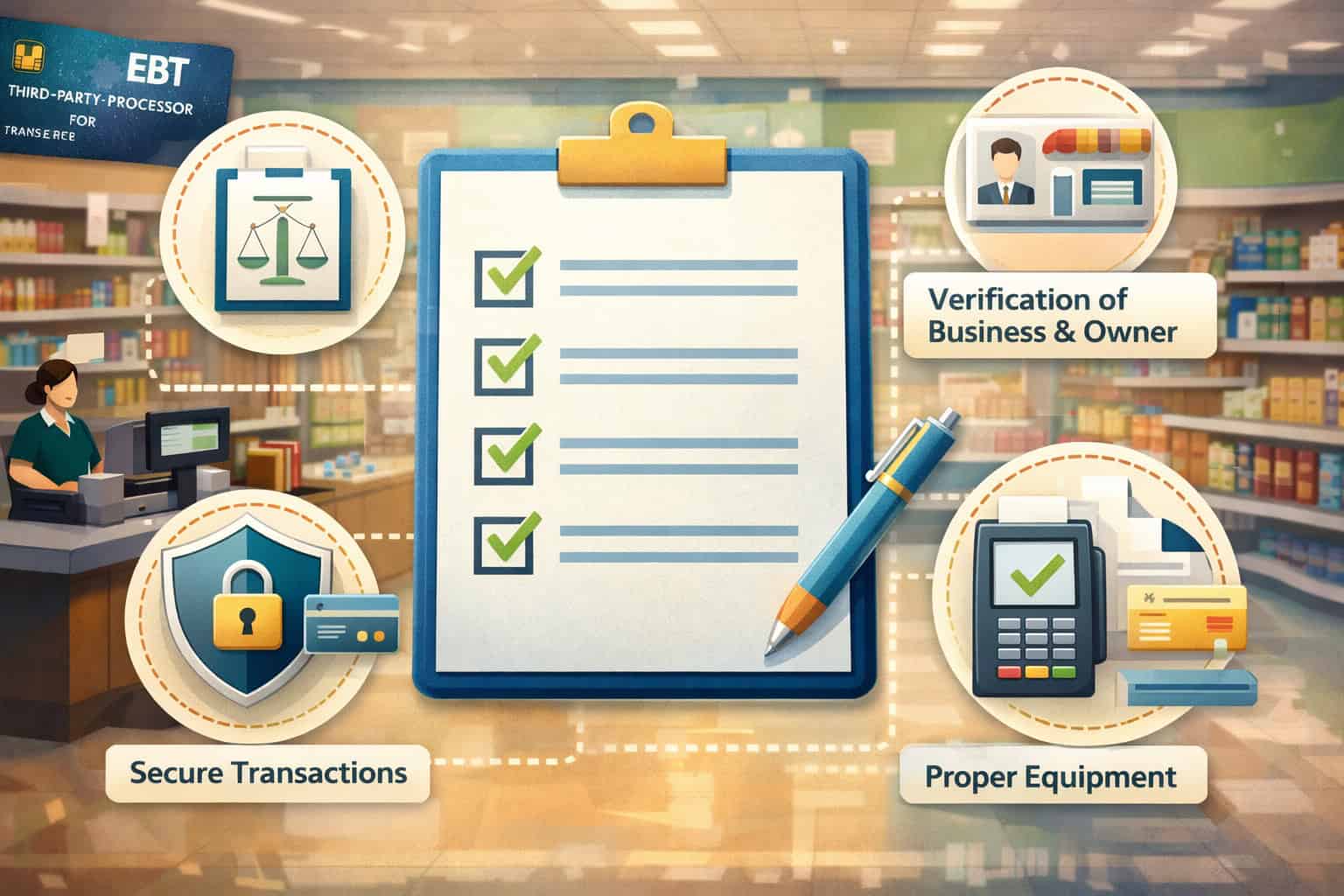
Accepting EBT can expand your customer base, strengthen community ties, and create a reliable revenue stream. But to do it correctly, you need more than a terminal and a sticker on the door—you need to meet program rules, pass eligibility standards, complete authorization, and stay compliant after approval.
This guide is built around an EBT merchant requirements checklist you can follow from “Am I eligible?” to “I’m live and processing.” It also includes online acceptance requirements, equipment options, compliance best practices, and a forward-looking view of where EBT acceptance is headed next.
EBT Merchant Requirements Checklist: Quick Start (What You Must Have)
Here’s the high-level EBT merchant requirements checklist most businesses should verify before applying:
- A legitimate retail food business model that fits SNAP retailer rules (or a qualified direct-marketing model like a farmers market)
- Ownership/identity details and business documentation required for the retailer application
- A store setup that meets eligibility criteria (typically staple foods inventory or staple food sales), or qualifies under “Need for Access” in limited-access areas
- A plan for EBT transaction processing using either your state’s EBT processor or a third-party processor (TPP)
- A compliance approach for preventing trafficking, handling refunds properly, and training staff
Now let’s break down each item with detailed, step-by-step guidance so your EBT merchant requirements checklist is complete and audit-ready.
Understanding EBT Acceptance and What “Authorization” Really Means
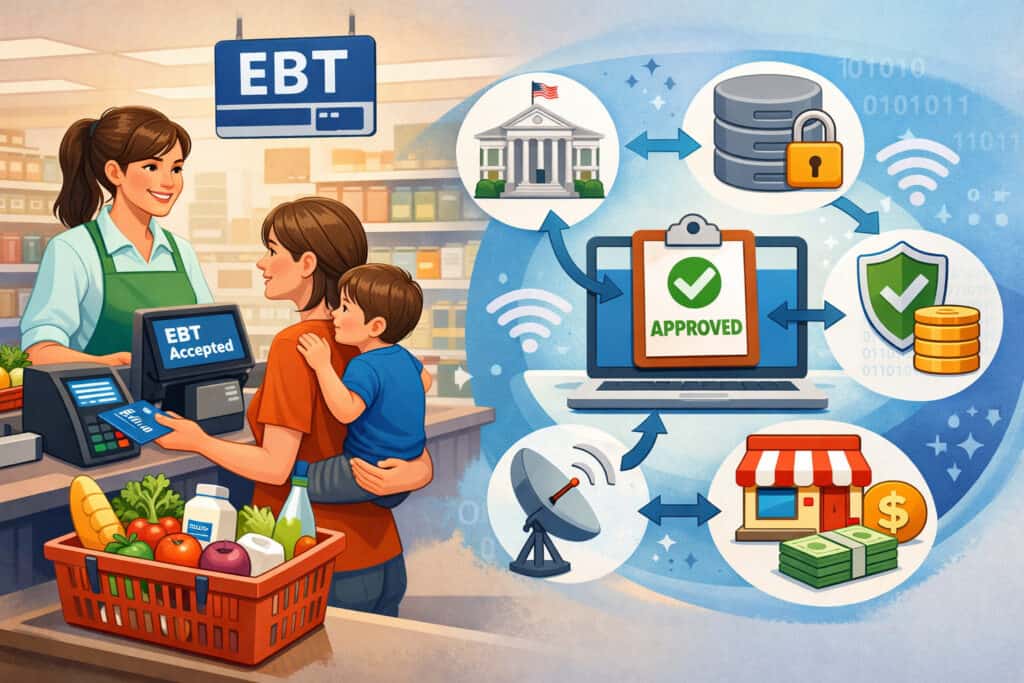
EBT is the payment method used to deliver benefits electronically, and SNAP is the primary food benefit program most merchants mean when they say “accept EBT.”
For merchants, the critical point is this: you don’t “turn on EBT” the way you enable a card brand. You must be authorized by the Food and Nutrition Service (FNS) to accept SNAP benefits.
That authorization is tied to your specific store or selling entity, not just your business name. If you operate multiple locations, each location generally needs its own approval path. This matters for your EBT merchant requirements checklist because it affects how you prepare documentation, how you set up devices, and how you manage compliance across locations.
EBT rules also affect what you can sell with SNAP benefits. Staples that are used to prepare meals at home generally qualify, while hot/prepared foods and certain non-food items do not.
Even when your store sells a wide range of items, your POS and operational procedures should support correct tendering so SNAP-eligible items are paid with EBT and ineligible items are paid another way.
Finally, EBT acceptance is not “set and forget.” FNS can monitor retailers and enforce penalties for noncompliance. So the best EBT merchant requirements checklist doesn’t stop at approval—it includes post-approval training, documentation, device security, and ongoing operational controls.
Store Eligibility Rules: The Make-or-Break Section of Your Checklist

Your EBT merchant requirements checklist must start with eligibility, because authorization depends on whether your store meets at least one of the core standards.
FNS explains that retailers generally qualify under Criterion A (Staple Food Inventory) or Criterion B (Staple Food Sales). Staple foods are basic foods that make up a large part of a person’s diet and are usually prepared at home. FNS identifies four staple food categories:
- Vegetables or fruits
- Dairy products
- Meat, poultry, or fish
- Breads or cereals
A key detail many applicants miss: staple foods do not include prepared or heated foods or “accessory foods.” Accessory foods are more like snacks, desserts, and items meant to complement meals rather than form a meal base.
If a store doesn’t meet the staple food inventory or sales criteria, there may still be a pathway under “Need for Access” in areas with significantly limited access to food—FNS describes this as an eligibility determination used when staple food requirements aren’t met but community access concerns exist.
Practical tip for your EBT merchant requirements checklist: before you apply, document your inventory and product mix clearly. Take photos of shelves, invoices, and supplier receipts, and create a simple internal list showing how your products map to the four staple food categories. This reduces delays and helps if your application is reviewed closely.
Criterion A: Staple Food Inventory (How to Prepare Before You Apply)
If you plan to qualify under inventory rules, your EBT merchant requirements checklist should include proof that you consistently stock staple foods across the required categories—not just occasionally or seasonally.
Start by mapping your current SKUs into the four staple categories. Then ask: do you have enough variety and depth that an auditor (or a reviewer) would agree your store supports meal preparation? Keep shelf photos dated, and keep a folder of supplier invoices. If you buy from wholesalers, keep delivery receipts. If you buy locally, keep purchase logs.
A common failure point is confusing “lots of food” with “staple foods.” Chips, candy, soda, and many convenience items may be considered accessory foods and don’t count toward staple requirements.
The Federal Register has discussed updating and codifying how staple varieties and accessory foods are defined for retailer eligibility, reinforcing that “snack-like” items generally don’t count toward meeting staple requirements.
Also watch out for inventory that is heavily weighted to hot or prepared items. If your business is primarily a restaurant or a hot-food deli model, you’ll want to review whether you truly fit retailer eligibility before you invest time.
If you’re building a new store or expanding product lines to meet eligibility, treat this as part of your EBT merchant requirements checklist timeline: stabilize your inventory for several weeks, keep proof, and then submit.
Criterion B: Staple Food Sales (When Sales Mix Matters More Than Shelf Mix)
Criterion B focuses on the share of your sales that come from staple foods, which can help some businesses whose shelf footprint is limited but whose sales are clearly meal-focused. Your EBT merchant requirements checklist should include POS reporting capability if you expect a sales mix to be part of your eligibility story.
The practical challenge is categorization: your POS must be able to report or reasonably demonstrate which items fall into staple categories. If your product database is messy, you’ll struggle to prove staple sales share.
This is why many operators treat inventory-based eligibility as simpler—because it can be shown with physical proof—while sales-based eligibility may require stronger reporting discipline.
If you’re a small grocer, market, or specialty shop, consider how you’ll document staples vs. accessory items. Create a “SNAP staples” product tag in your POS. Maintain an exportable report. And keep your invoices aligned with those categories.
Even if you qualify under Criterion B, you still need the rest of the EBT merchant requirements checklist: authorization, transaction processing setup, device security, and ongoing compliance.
Application & Documentation Requirements: What You’ll Need to Gather

A strong EBT merchant requirements checklist includes a documentation packet you can assemble in one sitting.
FNS states the SNAP retailer application is completed through an online process and that FNS is the only source that authorizes retailers. This matters because many merchants get approached by third parties promising “EBT approval.” You can use service providers for equipment and processing, but authorization is an FNS decision.
Plan to gather, at minimum:
- Business identity information and location details
- Ownership/management details and personal identity verification materials
- Store operations details (hours, product types, sales approach)
- Supporting evidence that you meet eligibility criteria (inventory, invoices, shelf photos, sales reports)
Your checklist should also include internal readiness: designate one person responsible for application accuracy, document retention, and responding quickly if additional information is requested. Delays often happen not because a store is ineligible, but because the submission is incomplete or inconsistent.
Also note: your EBT merchant requirements checklist should separate authorization from processing enablement. You may not need EBT equipment on day one of application, but you do need a plan for how you’ll process transactions after you’re approved.
FNS notes that you may not need equipment at the time you apply and that equipment selection typically comes after authorization.
POS Equipment and Processing Setup: State Options vs Third-Party Processors
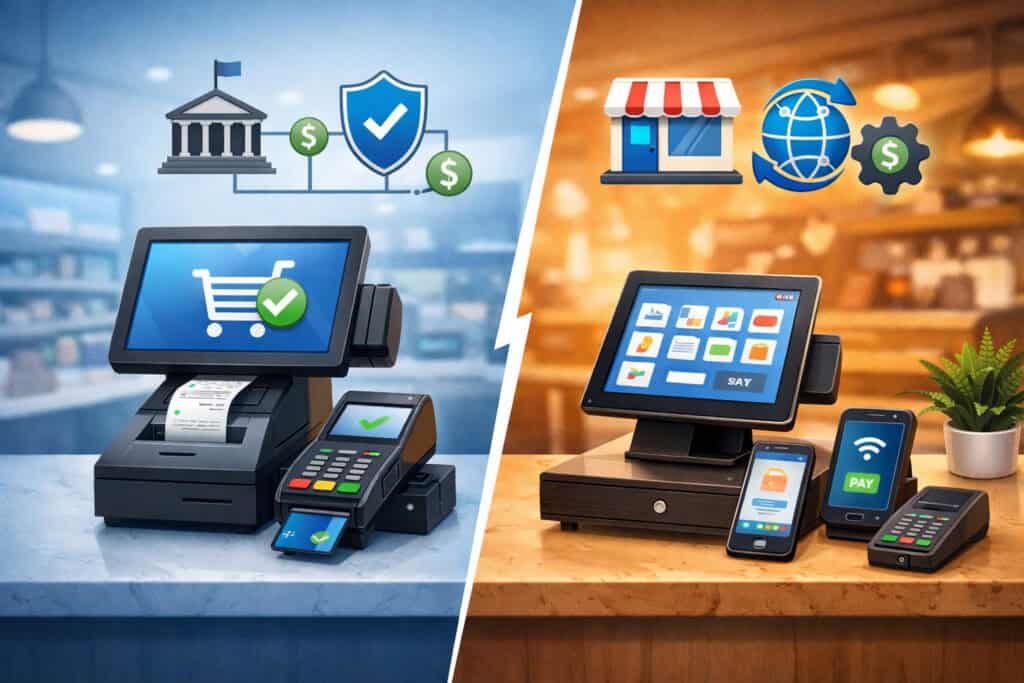
Your EBT merchant requirements checklist must include a clear choice for how you’ll route EBT transactions.
FNS explains that most retailers are required to pay for their EBT equipment and services, whether they obtain it from a state processor or a third party, and that some stores may be eligible for free state-supplied POS equipment.
That means cost and contract review belong on your checklist early—especially if you’re budgeting for a new store opening.
You typically have two paths:
- Work with the state EBT processor (availability and equipment offerings vary), or
- Choose a Third-Party Processor (TPP) that provides equipment and EBT services
FNS provides guidance for selecting a TPP and recommends comparing multiple companies, reviewing pricing, contract terms, and reputation. There is also a publicly listed dataset of TPP options and guidance for SNAP-authorized retailers seeking EBT equipment/services.
From an operational viewpoint, your EBT merchant requirements checklist should include:
- Device type (integrated POS vs standalone EBT terminal)
- Settlement timing and reporting access
- Support model (hours, replacement turnaround, training)
- Contract length, early termination, and fee transparency
- Security controls (user roles, password/PIN policies, device inspection routine)
The best setup is the one your staff can run flawlessly during busy hours while keeping SNAP tendering accurate.
Equipment Checklist for Farmers Markets and Direct-Marketing Vendors
Farmers markets and direct-marketing vendors often have unique workflows—wireless connectivity, token/scrip systems, multiple vendors, and outdoor operations. Your EBT merchant requirements checklist here must include both authorization and a practical transaction flow.
Organizations that support markets often emphasize that SNAP-authorized retailers work with a processor to complete EBT transactions and that the retailer should compare options and pricing structures.
Additionally, legal guidance for markets notes that markets or vendors may lease or rent POS devices from an EBT service provider, and that devices may need reprogramming under certain circumstances.
For markets, your checklist should also include:
- A defined plan for scrip/token issuance and redemption
- Daily reconciliation procedures (tokens issued vs redeemed)
- Vendor agreements and training to prevent misuse
- Connectivity testing (cellular/Wi-Fi) before market day
- Clear signage explaining eligible purchases and tender rules
Markets that succeed long-term treat EBT not as a “device problem,” but as a repeatable operational system with controls and documentation.
Step-by-Step Authorization Process: From Application to Approval
If your goal is a reliable, repeatable EBT merchant requirements checklist, you should document your authorization steps like a project plan.
FNS describes the retailer application as a simple online process and emphasizes that it costs nothing to apply. FNS also maintains retailer service center resources and references the retailer application form (Form FNS-252) in its retailer service center materials.
A practical step sequence looks like this:
- Confirm eligibility strategy (Criterion A, Criterion B, or Need for Access) and assemble supporting proof
- Submit the online retailer application with accurate store and ownership details
- Respond quickly to any follow-ups or verification requests
- After approval, choose processing and equipment if you haven’t already
- Train staff and go-live with a compliance-first workflow
Your EBT merchant requirements checklist should also include a “consistency check” before submission: business name, store address, owner name, and identification details must match across documents. Many preventable delays come from mismatches.
Finally, document your internal “day one” SOP: what staff should do if an EBT card is declined, how split tender works, how refunds are handled, and who to call for support.
Compliance, Audits, and Trafficking Prevention: Protecting Your Authorization
Approval is not the finish line. A complete EBT merchant requirements checklist includes a compliance program that reduces risk and protects your authorization status.
At a practical level, compliance means:
- You process EBT only for eligible items
- You never exchange benefits for cash
- You keep clear records
- You maintain device and staff controls to prevent misuse
To make compliance real, build a short training module:
- “What counts as staple food vs accessory food” (and why hot foods are tricky)
- How to handle mixed baskets (EBT + other tender)
- Returns/refunds rules in your POS flow (set manager-only permissions)
- Red flags: unusually large transactions, repetitive patterns, manual overrides
Your checklist should also include physical and technical controls:
- Keep terminals where they’re visible to managers
- Use unique cashier logins if possible
- Reconcile daily totals and investigate anomalies
- Maintain a “retention folder” with invoices and inventory proof
If you operate multiple locations or do high volume, consider quarterly internal reviews. A little governance goes a long way: many compliance failures are operational drift—new staff, rushed processes, and unclear tender rules.
Online EBT Acceptance Requirements: What Changes When You Sell on the Web
Online EBT is growing, but it has additional requirements beyond in-store acceptance. Your EBT merchant requirements checklist must treat online acceptance as an “add-on authorization” with technical testing and controls.
FNS indicates that additional authorization is needed for online participation and outlines criteria for retailers who want to offer online purchasing. FNS also describes an onboarding process that includes end-to-end testing by both the retailer and FNS before launch coordination.
For online EBT, your checklist should include:
- A compliant ecommerce experience that separates eligible vs ineligible items at checkout
- Clear fees and messaging (no hidden charges that confuse benefit tendering)
- Fraud and account security controls (identity checks, velocity limits, address verification where appropriate)
- A stable order management process for substitutions (substitutions can create eligibility issues if not handled carefully)
You should also plan your customer support workflow: online EBT users need clear guidance on split tender, minimum basket rules (if any), delivery windows, and substitutions.
Future-facing prediction: Expect online EBT to keep expanding in scope and technical sophistication—more standardized testing, stronger fraud tooling expectations, and deeper integrations between ecommerce platforms and EBT processors. Retailers that build clean product data and eligibility tagging now will be positioned to scale later.
Costs, Contracts, and Operational Reality: What Merchants Commonly Miss
A high-performing EBT merchant requirements checklist includes cost planning and vendor negotiation.
FNS notes that most retailers pay for EBT equipment and services, and retailers should compare offers from multiple providers. This is where merchants get surprised—especially smaller operators—because EBT is often operationally essential, but the commercial terms can vary.
Before signing anything, add these to your checklist:
- Monthly fees, per-transaction fees, and batch/settlement fees
- Device lease vs purchase costs and replacement terms
- Help desk availability and escalation timelines
- Contract length and early termination fees
- Funding schedule and reporting transparency
Also consider workflow costs:
- Staff time for reconciliation
- Training and turnover
- Device connectivity issues (especially in rural or outdoor settings)
If you already have a POS system, ask your existing processor about EBT enablement. FNS’s new retailer factsheet suggests discussing programming of existing equipment with your current processor and comparing cost information.
When your EBT merchant requirements checklist includes both cost and compliance, you avoid the most common trap: choosing the cheapest setup that becomes expensive through downtime, poor support, or messy reporting.
Future of EBT Acceptance: What to Prepare for in 2026 and Beyond
Merchants who treat EBT as a long-term channel build better systems and face fewer surprises. Your EBT merchant requirements checklist should include future readiness, not just today’s minimum.
Here are realistic trends to watch:
- More precise definitions of staple vs accessory foods and how retailers document eligibility—Federal Register activity shows ongoing attention to how foods are classified for eligibility purposes.
- Broader online purchasing coverage and improved onboarding standards, including more consistent end-to-end testing expectations
- Stronger fraud prevention expectations, especially for online orders and high-risk transaction patterns
- Better device flexibility, including more modern POS integrations and improved support for mobile environments (especially for markets)
A practical prediction: successful merchants will standardize SNAP item tagging in product catalogs, maintain cleaner invoices and inventory logs, and use tighter role-based controls at the register. As programs modernize, the gap will widen between merchants who “just got approved” and merchants who can prove compliance quickly and confidently.
If you build your EBT merchant requirements checklist as an operating system—eligibility proof, device controls, staff training, and audit-ready records—you’ll be positioned for growth as acceptance options expand.
FAQs
Q.1: Do I need EBT equipment before I apply?
Answer: Not necessarily. Many retailers apply first and select equipment after authorization. Guidance for retailers indicates you may not need EBT equipment at the time you submit your application, and that equipment options can be addressed after approval.
However, your EBT merchant requirements checklist should still include an equipment plan before you apply. Why? Because once you’re approved, you’ll want to go live quickly—and you’ll need to compare processors, choose a device type, and ensure your settlement reporting is set up correctly.
FNS also notes that most retailers pay for EBT equipment and services, so budgeting early prevents delays and surprises.
If you already use a POS system, talk to your current processing provider about EBT enablement and potential programming requirements. That conversation helps you understand lead times, fees, and whether a standalone EBT-only terminal is a better fit for your workflow.
Q.2: What foods count for eligibility and why do “accessory foods” matter so much?
Answer: Eligibility is tightly tied to staple foods—items that form the foundation of meals prepared at home. FNS outlines four staple categories: vegetables/fruits, dairy, meat/poultry/fish, and breads/cereals.
Accessory foods matter because many stores stock lots of food that still doesn’t meet staple requirements. Snacks, desserts, and “complement” items may not count toward the staple thresholds used for authorization.
Recent Federal Register activity highlights the continued effort to codify how staple varieties and accessory foods are defined for retailer eligibility, reinforcing that “snack-like” items generally won’t help you qualify.
For your EBT merchant requirements checklist, this means you must:
- Build inventory depth across the staple categories
- Keep proof (photos, invoices, receipts)
- Avoid assuming that “food is food” for eligibility purposes
If you’re a convenience-focused store, the fastest path to approval often involves expanding staple offerings in a documented, consistent way rather than trying to argue that accessory-heavy inventory should count.
Q.3: Can my ecommerce store accept EBT for delivery or pickup?
Answer: Online EBT acceptance is possible, but it’s not automatic. FNS indicates retailers must already be eligible to accept SNAP and need additional authorization for online participation. FNS also describes an onboarding process with end-to-end testing performed by the retailer and by FNS before confirming launch details.
That changes your EBT merchant requirements checklist. You’ll need:
- Item-level eligibility tagging in your catalog
- Checkout logic that correctly separates eligible vs ineligible items
- A substitution policy that prevents ineligible replacement items from being paid with EBT
- Fraud controls and clear customer messaging
If you’re planning an online EBT, build your tech and operations together. The best online implementations treat eligibility as data (product tags and rules) rather than relying on manual decisions after an order is placed.
Q.4: Do farmers markets and mobile vendors have different requirements?
Answer: The core authorization concept is the same, but the operational checklist is different. Markets often operate with wireless devices, centralized token/scrip systems, and multi-vendor redemption, which introduces reconciliation and control requirements.
Guidance in the market ecosystem highlights that SNAP-authorized retailers work with processors to complete EBT transactions and that selecting a processor involves comparing options and pricing.
Legal guidance also notes that farmers markets or direct marketing vendors may lease/rent POS devices, and device programming requirements may apply in certain scenarios.
For your EBT merchant requirements checklist, add:
- Market-day connectivity checks
- Token issuance + redemption reconciliation
- Vendor training and clear “eligible items” signage
- A documented process for device handling and staff accountability
Markets that run clean systems treat EBT like a financial control environment, not just a community service.
Conclusion
A strong EBT merchant requirements checklist is more than a list of boxes to check for approval—it’s a practical operating system that keeps you compliant, audit-ready, and easy to run during peak hours.
To succeed long-term:
- Start with eligibility (staple foods inventory or sales, and understand accessory foods)
- Complete authorization through FNS and keep documentation consistent and organized
- Choose processing and equipment with support, transparency, and compliance controls in mind
- Train staff, protect your devices, and reconcile activity routinely
- If you go online, treat it as an advanced capability with additional authorization and testing
EBT acceptance is expanding—especially online—and retailer standards continue to evolve. If you build your EBT merchant requirements checklist with solid documentation, clean product categorization, and disciplined operations, you’ll be positioned to grow smoothly as EBT technology and policy modernize.